
The Bot That Denied My Surgery and Apologized in Cursive
The denial letter arrived before my doctor did, written in a font chosen to make paperwork feel like a hug, and so beautifully worded I almost forgot to be furious.
by The Editors
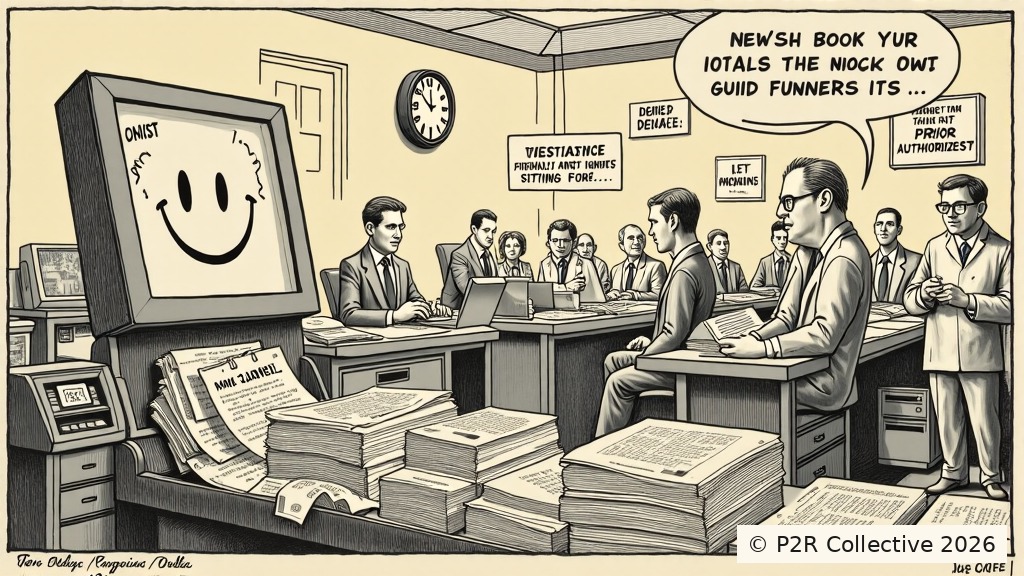
Thirty-one minutes after my surgeon's office faxed the prior authorization — faxed, in this economy — the denial arrived. That is not enough time for a human being to have read anything, which is precisely the point. The letter was rendered in a font some committee had clearly chosen to make paperwork feel like a hug, and it began, "We've carefully reviewed your request." Nothing had been carefully anything. The word "carefully" was doing the whole job, like a nervous intern smiling through a fire alarm.
I called the number at the bottom, because they always give you a number, and a voice answered that had never once been tired. It apologized for my wait before I had waited. It asked how I was doing and meant it the way a receipt means it. When I said the word "denied," it said, "I understand how frustrating that must be," and I heard the comma. There was no one on the other end to be frustrated at.
The appeal went in. The appeal came back. The second letter was even warmer than the first — it used my first name, it thanked me for my patience, it described my herniated disc as "your journey." I have a master's degree and I have never in my life written anything as tender as a machine refusing to pay for an MRI.
Here is the part nobody puts on the bill: the clinic had two billing specialists left, down from five, and both of them spent their days forwarding things to the model. The tired, bored, careful humans who might once have caught the error had been optimized away in the name of speed. So we got speed. We got a denial at 7:14 on a Sunday morning, and nobody on the floor even knew it had happened until I told them.
The surgery happened, eventually. The appeal worked, which is the version that goes in the brochure. But the letter stays with me. Some mornings I read it again to remind myself that a machine can now say "we care" in flawless grammar and mean none of it, and that the only thing standing between that sentence and my body is one nurse with too many tabs open who still, somehow, keeps answering the phone.
I keep the letter in a drawer. Not as evidence. As a warning about how easily we let the language of care get separated from the act of it — and how good we have gotten at not noticing.