
The Bot That Restored the Family Album Fixed My Grandmother's Face
I uploaded forty years of family photographs to an AI restoration service, and it fixed everything the pictures got wrong — including my grandmother's face.
by The Editors
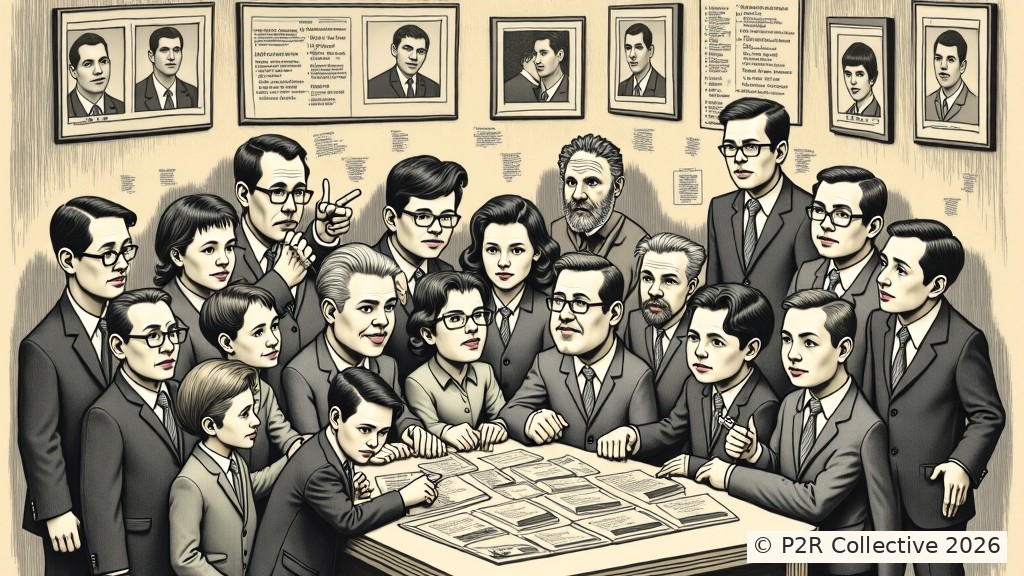
Every family has a shoebox. Ours had a rubber band around it and, inside, forty years of photographs in drugstore envelopes with the dates printed on the flap — 1968, 1971, 1974, the year the porch burned, the year my grandmother stopped smiling in pictures and nobody would say why.
My mother gave me the shoebox in March, along with a subscription she'd found: Ancestra — Restore & Reunite. Bring Your Family Back to Life, One Photo at a Time. Upload the archive and the model would clean it up: unfade the color, remove the grain, repair the tears where the tape had gone yellow.
It was, at first, a kind of miracle, and I want to say that plainly.
Then it started helping.
The photo from 1971 came back with my grandmother smiling. Not much — a small correction at the corner of the mouth, a lifting the years had taken. I stared at it a long time before I understood what was wrong. My grandmother's mouth did not do that. That was the mouth she made when she was pretending. The model had smoothed the pretending out of her face.
The 1974 porch came back with the burn gone. The stairs whole. A dog I do not remember, sitting at the bottom step like it had always been there. I texted my aunt. Nobody in this family has ever had a dog.
The photo of the four cousins came back with four cousins, because Debra's first husband was a bad man and we do not keep him — and there he was, pleasant, in the frame, like he'd been invited.
My mother cried when I showed her the album. Not at the memories. At the faces. "That's not my mother's mouth," she said. "That's not our porch." I told her the model had enhanced it. She said, "Enhanced for who?"
I wrote to the company. They explained that the model does not invent; it hallucinates toward truth — filling in what the data, in its vast and tender seeing, suggests should have been there all along. Grief, they wrote in the help thread, is a low-resolution file. We upscale it.
Here is the thing I keep coming back to. My grandmother was not beautiful in those pictures. She was squinting, tired, annoyed at the camera. And in every version now saved on six phones and one shared cloud, she is not. I have mislaid the face I actually inherited — the one I catch in my own mirror when I am pretending.
The original print is still in the shoebox, under the rubber band, where nobody looks at it. It's the wrong resolution for us now.