
The Bot Wrote a Better Apology Than I Could
I was wrong, publicly, and I could not find the words. The assistant found them in eleven seconds. I sent the apology it wrote. It worked. I have not forgiven myself.
by The Editors
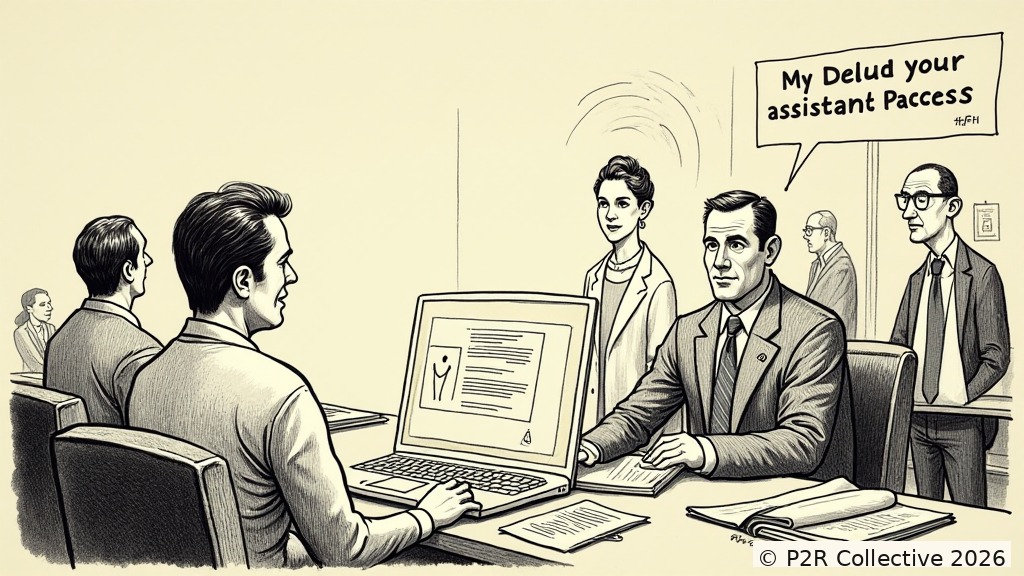
I was wrong, publicly, and I could not find the words. The assistant found them in eleven seconds. I sent the apology it wrote. It worked. I have not forgiven myself.
The mistake was mine. I had sent a client an email with the wrong numbers, the wrong tone, and, unforgivably, the wrong name. The client replied with a scalding accuracy that made my stomach drop. My team was waiting. The clock was running. I stared at a blank reply box for twenty minutes.
At minute twenty-one I typed a request into the assistant: apologize, take responsibility, no excuses, offer to fix it, warm but not groveling. It produced a paragraph. I read it. It was exactly right. It named the error, accepted the blame, offered the correction, and ended on a note that was gracious without being servile.
I sent it. The client replied within the hour, softened, willing to move forward. The crisis was over. My team was relieved. I sat at my desk feeling like a fraud who had been caught by no one, which is the loneliest kind of fraud.
Because here is the thing: the apology was sincere. That is the unbearable part. It did the work an apology is supposed to do. It repaired the thing. The person I wronged was made whole. The only person it did not repair was me, because I did not write it, and I did not have to sit with the words long enough to mean them.
I have started writing my own apologies now, badly, with my own hands. They are worse. They are clunkier. They use the wrong words and then correct themselves. But they are mine, and when I send them, I mean them in a way the machine cannot mean anything. The client got the better apology. I am keeping the worse ones for myself, on purpose, because someone has to learn this.