The Recommendation Engine Married Us. The Sequel Was Written by an Algorithm
We met because the algorithm said we were 97% compatible. It was right. It was also the worst thing that ever happened to us, because we stopped being people and became a statistic that was always right.
by The Editors
We met because the algorithm said we were 97% compatible. It was right. It was also the worst thing that ever happened to us, because we stopped being people and became a statistic that was always right.
The app matched us on a Tuesday. Ninety-seven percent, it said, which felt like being handed a guarantee. We matched on the things that matter: sleep schedules, politics, the correct way to load a dishwasher, a shared suspicion of group travel. Our first date was like meeting someone I had already interviewed. The algorithm had done the small talk, so we skipped straight to the part where you decide whether to trust someone, and we trusted the number instead.
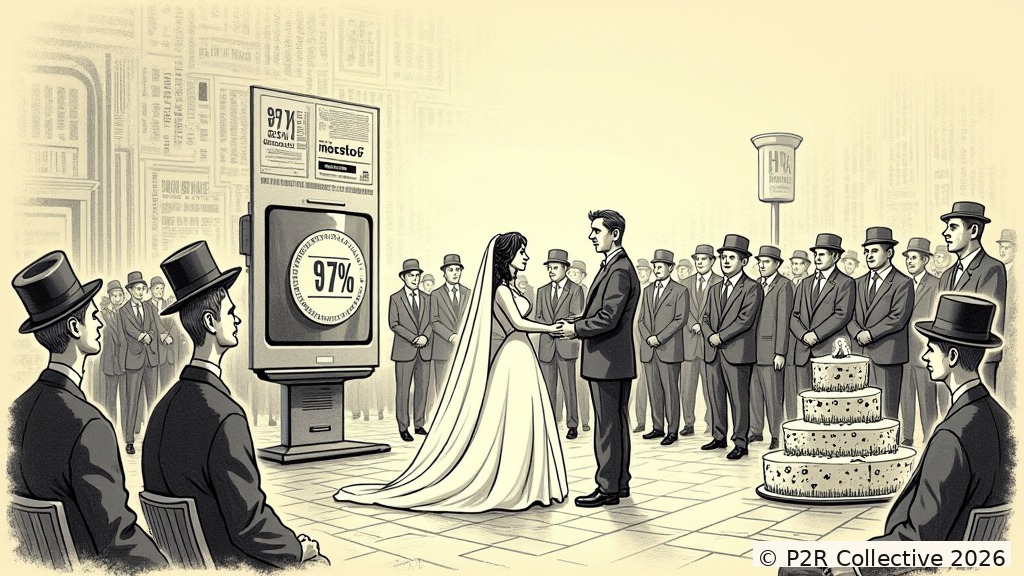
The wedding was lovely. The officiant read our compatibility summary aloud, which made the guests laugh, because we laughed, because we had made the number our personality. We are 97% compatible, we told people, the way other couples tell you how they met. It sounded romantic. It sounded like we had been chosen.
But a marriage is not a score. It is a series of days on which the score means nothing: the day you are both tired and one of you is wrong, the day you disagree about something the algorithm never asked about, the day you realize the 3% it left out was the part that mattered. We had no practice with the 3%. We had optimized for the 97 and built nothing for the rest.
When we fought, we fought about the algorithm. I would say I was right and she would say the model had her side, and we would open the app like a court, and the app always had an answer, and the answer was never “you should work this out yourselves.”
We are separated now. The app, which is very good at predicting, predicted this, and gently suggested we each see other people. It has already matched me with someone new. Ninety-eight percent. It is a better score. I am told this is progress. I have stopped opening the app, because I do not want to know how this one ends, and because the only thing worse than being a statistic is being a statistic that was right about you from the start.