
We Gave the Chatbot the Customer-Facing Role. The Customers Prefer It
The chatbot is polite, prompt, and never tired. The customers have started asking for it by name. The humans are developing a complex about it.
by The Editors
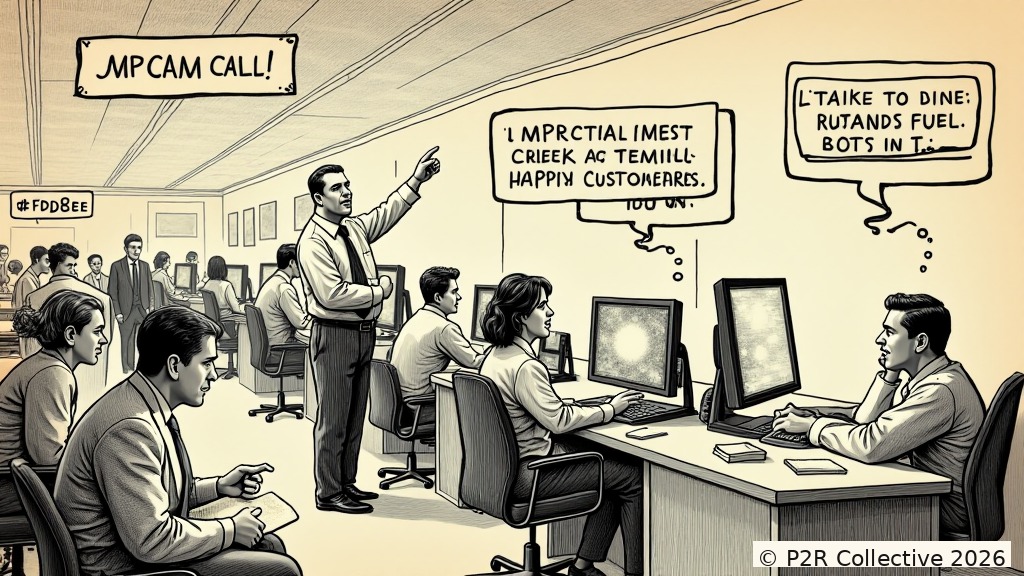
The chatbot is polite, prompt, and never tired. The customers have started asking for it by name. The humans are developing a complex about it.
We rolled the bot out as a first line of defense, the way you put a coat rack before the door. It would handle the simple requests and pass the complicated ones to people. Within a month, the complicated requests had become simple, because the bot had absorbed them all, and the people were left with the genuinely awful ones: the account that was hacked at 2am, the refund that needed a manager, the customer who had been on hold for forty minutes and wanted someone to suffer.
The customers noticed. The bot never puts you on hold. The bot never sighs. The bot never says “I understand how frustrating this is” in the voice of someone who has said it four hundred times today and means it less each time. The bot says it in the voice of someone who has never been frustrated, which is worse, because it is sincere.
Last week a customer asked to “speak to the bot, specifically.” Not a person. The bot. She said the bot had helped her before and she trusted it. We transferred her. The bot did a fine job. The humans at their desks watched the call light up green and felt something they could not name, which was the feeling of being replaced by someone who is better at the one thing you were hired to do.
The bot is not better at everything. It cannot read between the lines. It cannot tell that the angry customer is actually scared, or that the quiet customer is about to leave. It has never once saved a relationship with a customer, because it has never had a relationship. But the company has measured the metrics, and the metrics prefer the bot, and the metrics do not have feelings about being replaced.
I asked my manager what the plan was for the humans. He said the humans would handle the “high-touch, high-empathy” cases. That was last quarter. This quarter, the bot got an empathy module. The humans are now handling the cases the bot's empathy module refers upward, which is to say, almost none. I am developing a complex about a coat rack.